

A free event presented by Robert Poole (University of Alabama)

Friday, April 17, 2026, 10:00 am – 11:30am MST (UTC -7)
Click here to see what time is is where you live.

Abstract:
This webinar introduces participants to ecolinguistics and its potential for fostering eco-critical language awareness in the language learning classroom.
Participants will learn:
- Core features of the emerging field of ecolinguistics and its potential to contribute to ecological wellbeing and sustainability in the language classroom and beyond
- The principles of eco-critical language awareness and how these aims can inform pedagogy and practice
- To design activities that develop eco-critical language awareness amongst learners in the classroom
Bio:
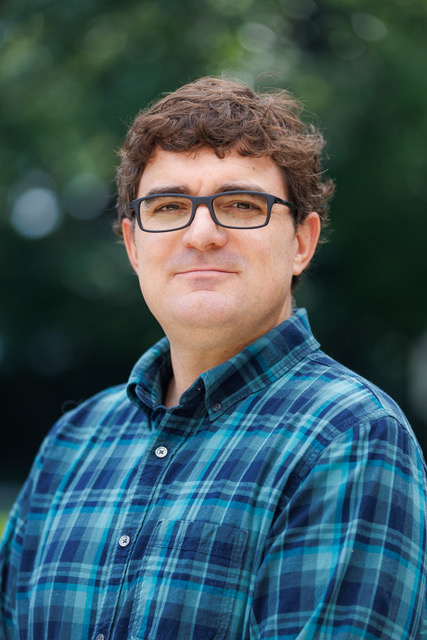
Robert Poole is Associate Professor of TESOL and Applied Linguistics at the University of Alabama. His interests in ecological wellbeing and sustainability are advanced in his research in ecolinguistics, corpus-assisted discourse studies, and language teaching and learning. He recently hosted an international symposium on ecolinguistics, serves as the lead academic editor of the forthcoming The Bloomsbury Handbook of Ecolinguistics, and has an additional forthcoming monograph titled Environment through Time: Diachronic Studies in Ecolinguistics to be released by Routledge in 2026. In recent years, he has increasingly connected ecolinguistics and its aims for wellbeing and justice with (English) language teaching and learning.
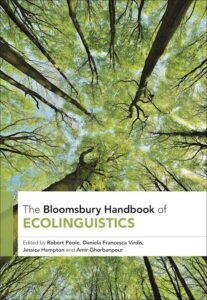 Dr. Poole has a book forthcoming in November, 2026: The Bloomsbury Handbook of Ecolinguistics (co-edited with Daniela Francesca Virdis, Jessica Hampton, Amir Ghorbanpour)
The Bloomsbury Handbook of Ecolinguistics is a comprehensive guide focusing upon the expanding field of ecolinguistics and its investigations of the role of language in the life-sustaining interactions of humans, other species, and the more-than-human world. The collection explores topics such as climate change discourse, representations of plants and animals, relationships with land, ecotourism, language education in the Anthropocene and much more, in addition to comprehensive overviews of approaches and methods of analysis such as corpus-assisted discourse studies, econarrative, ecopoetics, ecostylistics, metaphor analysis, positive discourse analysis, and systemic functional linguistics. The chapters illustrate both the primary approaches to analysis within ecolinguistics while also surveying numerous domains in which ecolinguistics research is pursued.
Learn more about this volume here: https://www.bloomsbury.com/us/bloomsbury-handbook-of-ecolinguistics-9781350497207/.
This is the first event in a three-part series on Sustainability in Language Education: Research-Based Curricula and Practices. More details coming soon!.
Participants attending this webinar live can request a certificate of attendance for 1.5 hours of Continuing Education in a request form that is shared at the end of the event. CERCLL will contact them after the webinar about how to request a digital badge.
Participants who require closed captions or an ASL interpreter during CERCLL’s events should make this request at least a week in advance by emailing CERCLL at cercll@email.arizona.edu.