
A free webinar presented by María Luisa Parra-Velasco (Harvard University) and Jorge Mendez-Seijas (Yale University)
May, 1, 2026, 10:00 am – 11:30am MST (UTC -7)
Click here to see what time is is where you live.
Abstract:
In this interactive webinar, participants will learn how to (re)design beginner language courses and tasks in which literacy development progresses alongside rich, meaningful, and compelling content. Grounded in content-based instruction (CBI) and informed by the multiliteracies pedagogical framework, the session positions sustainability as an organizing thread for unit and task planning, thereby connecting novice learners to social, cultural, and environmental questions in Spanish-speaking communities at local, national, and global levels.
As way of example, this webinar looks to highlight four adaptable thematic modules implemented at Harvard University and unpack the decision-making behind selecting texts (written, audio, audiovisual) that are authentic, timely, and intellectually engaging—yet still appropriate for beginners. Participants will see concrete scaffolding routines they can use immediately: sequencing tasks from supported comprehension to guided analysis, layering language support for text-based interpretation, structuring collaborative meaning-making, and designing interpretive and presentational activities that culminate in multimodal student products.
To support transfer to participants’ own contexts, we will share takeaways from multiple semesters of implementation, including learner feedback on engagement, perceived difficulty level, and growth in confidence and accuracy. Time will be built in for discussion of how access to sophisticated content can motivate learners at any proficiency level, support identity-affirming classroom discourse, advance critical analysis of “glocal” problems, and strengthen program goals without overwhelming students or instructors. Participants will leave with practical templates for designing units and tasks, building interpretive and presentational task sets, and aligning outcomes to proficiency, literacy, and sustainability awareness.
The presenters of this webinar are co-authors of a chapter, “Engaging Students with Social, Cultural, and Environmental Sustainability Topics in the Spanish-Speaking World: A Reimagined Beginner Spanish Curriculum,” in De La Fuente, M. J. (2021) Education for Sustainable Development in Foreign Language learning. https://doi.org/10.4324/9781003080183.
You can read this open access chapter here.
Bios:
 Jorge Méndez-Seijas is the Director of the Spanish Language Program and an Associate Research Scholar at Yale University. With an academic background in applied and theoretical linguistics, Jorge’s research interests span several areas, including second language (L2) acquisition and instruction, heritage language education, curriculum design, and L2 phonetics and phonology. Before joining Yale, his professional trajectory included experiences at Harvard University, Princeton University, Georgetown University, and the University of Rhode Island.
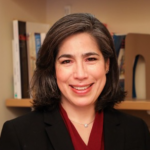 María Luisa Parra-Velasco is Director of the Spanish Language Program and the Spanish as a Heritage Language Initiative at Harvard University. Her work focuses on designing inclusive, innovative programs for bilingual students, with an emphasis on heritage language education, identity, migration, and intercultural learning. Grounded in critical pedagogy, she connects classroom learning with community engagement, the humanities and collaborations with the Harvard Art Museums. She is the author of Enseñanza del español y juventud latina (Arco Libros, 2021) and coauthor of Enseñar y aprender en la interculturalidad (El Colegio de México, 2026).
This is the second event in a three-part series on Sustainability in Language Education:Research-Based Curricula and Practices. Details coming soon!.
Participants attending this webinar live can request a certificate of attendance for 1.5 hours of Continuing Education in a request form that is shared at the end of the event. CERCLL will contact them after the webinar about how to request a digital badge.
Participants who require closed captions or an ASL interpreter during CERCLL’s events should make this request at least a week in advance by emailing CERCLL at cercll@email.arizona.edu.